Today’s hectic lifestyle has led to many modern-day problems, one of which is PCOD. Yoga Poses for PCOD is a problem that has become very common in women. The term PCOD stands for polycystic ovarian disease. This disorder is an endocrine disorder that happens due to a hormonal imbalance. The type of food we eat, the lifestyle we live, the sleep quality we have, and the daily mental stress contribute to problems like this in women.
This disease is said to disturb the function of the ovaries present in the female human body. People with PCOD are seen to have multiple cysts on the ovaries. It can be either on one ovary or both ovaries. These are some of the common symptoms that emerge from the hormonal disturbance in women.
This might sound like a physical problem, but it is also connected to mental health. The most common reason why Yoga Poses for PCOD occurs in women is when the female body starts producing excess male hormones. It can be genetic, it can be due to insulin resistance, or it can also be due to the daily stress and sedentary lifestyle. In simple words, when the hormones get disturbed in a female body, it leads to the production of abnormal eggs that turn into cysts or other painful symptoms in the ovaries. This sometimes leads to challenges with fertility as well as reproduction.
The causes of Yoga Poses for PCOD – From YOGA’s Eyes
There are several factors described in the ancient practice of Yoga that lead to PCOD:
1. The imbalance of Vata and Kapha Dosha in the body is the major cause of PCOD.
2. The tamasic and rajasic food blocks slow down the prana, which often leads to PCOD!
3. A sedentary lifestyle, including poor sleep, excessive stress routine, lack of body movement, and no yogic routine, leads to Yoga Poses for PCOD.
4. When Ama or toxins pile up inside the body, it causes PCOD!
Yoga is a holistic method of healing. It is known to help in managing PCOD’s symptoms. If you will practice the yoga disciplinethen it can heal PCOD naturally… Unlike modern medicines, Yoga offers the treatment of the root cause of PCOD. The poses and lifestyle in yoga balance the dosha imbalance, hormonal imbalance, the food habits, and correct the lifestyle, which naturally helps in fighting Yoga Poses for PCOD.
1. Malasana
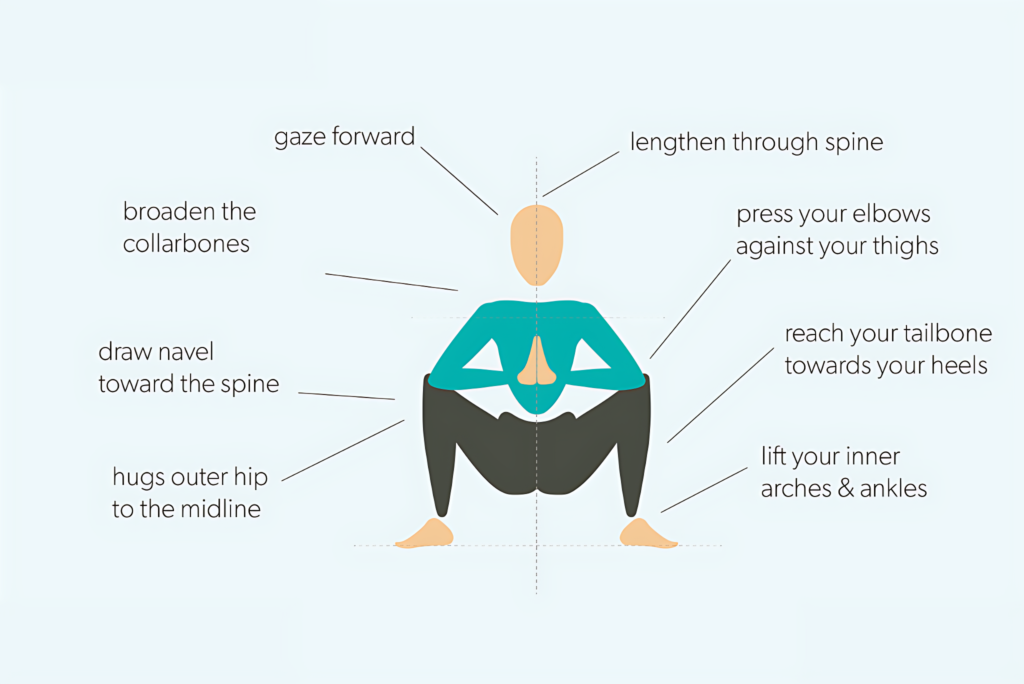
This asana is one of the best yoga poses for PCOD! This pose helps in managing the symptoms of polycystic ovarian disease. When you practice this asana daily, you will feel the strength in your pelvic floor. It massages the abdominal core and is known to open up the hips. By performing this asana, the blood circulation in the pelvic region increases, the metabolism improves, and the digestion becomes better. All these changes contribute to the cure of polycystic ovarian disease. It also helps in managing the pain and the physical symptoms of the disorder. Therefore, this is the best holistic method of treating and preventing Yoga Poses for PCOD.
How to perform Malasana?
Also known as the Yogic Squats, you can achieve this pose in the following simple steps.
1. Firstly, roll out your mat and stand straight on your feet where your feet are placed wider than your butts and the toes are turned outwards.
2. Now, bend your knees and lower your butts a bit in a squat position. Make sure that your heels are grounded enough.
3. Your palms should come together in front of your heart. Now, you have to press your elbows against the inner side of both knees.
4. Keep your spinal cord straight and try to lift your chest a bit.
5. Now, breathe calmly and hold the pose for a few comfortable breaths.
6. Now, release and straighten your leg slowly and gently.
2. Baddha-Konasana
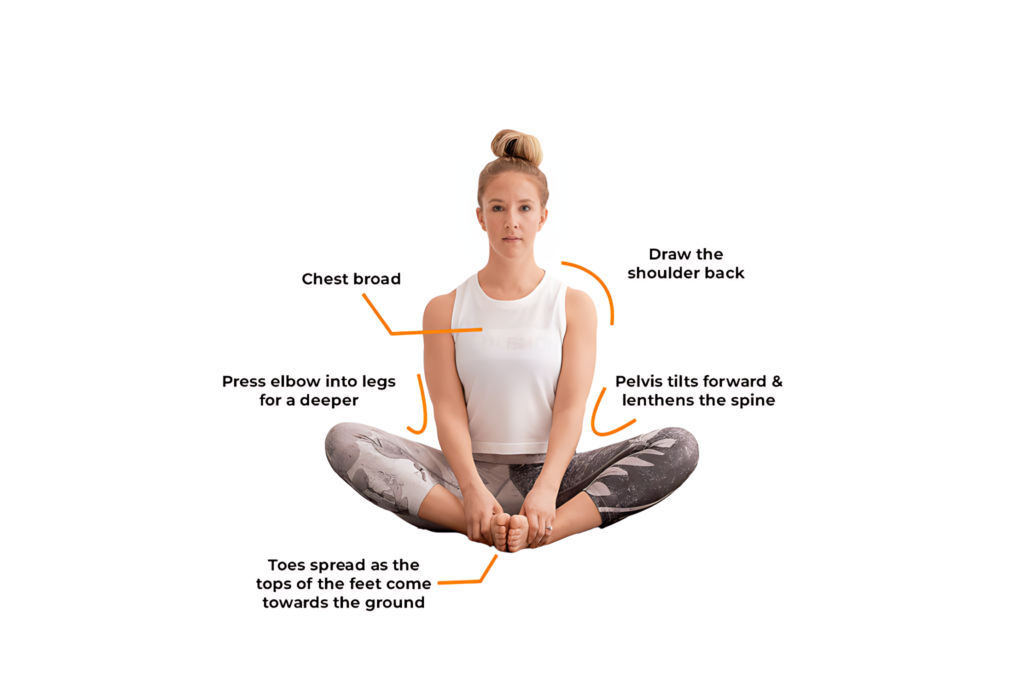
Bandh Konasana, also known as the butterfly pose, is one of the best poses that is used to treat and manage Yoga Poses for PCOD using yoga. It helps in opening up the hip gently and improves the flexibility of the pelvic region. This yoga helps in stimulating the reproductive organs and gives a gentle massage to the ovaries and the kidneys. It supports reproductive health. Moreover, this pose helps in alleviating the discomfort of PCOD in women!
Steps to perform Bandh Konasana
1. To perform Bandh Konasana, you need to sit on your mat and bring your feet together. -Next, make sure that your groins are closed and both knees are turned outward.
2. Now, you have to hold your feet. After that, gently keep bringing your knees closer to the mat as much as possible.
3. Now, maintain an upright position where your spinal cord is straight and balanced.
4. Do this pose for 30 seconds!
3. Setu-Bandhasana
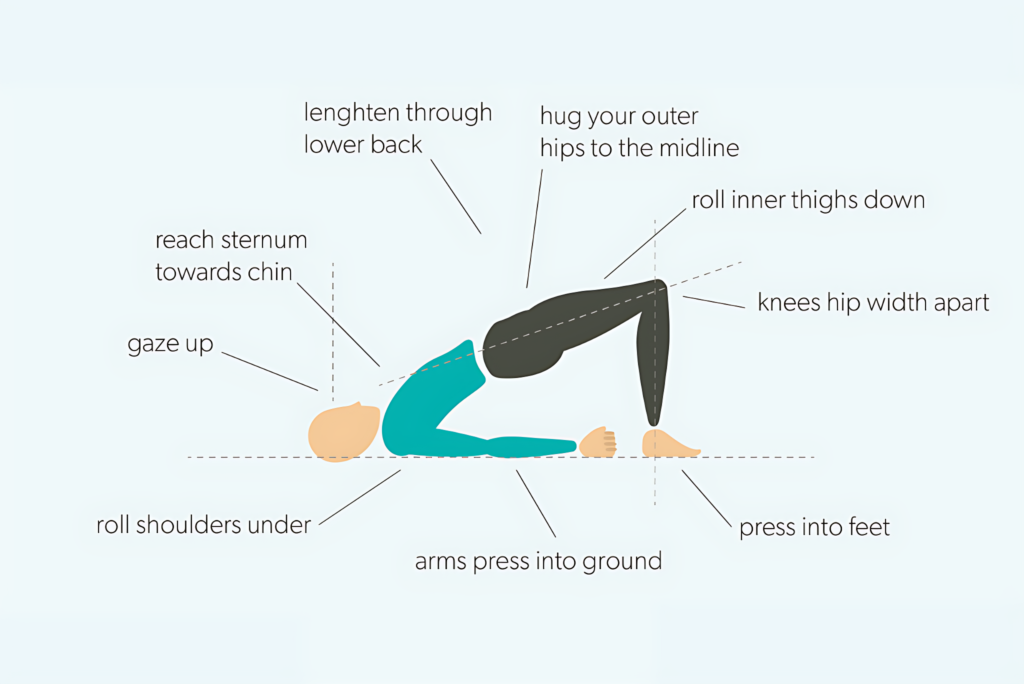
Now, the next pose that helps in treating and managing PCOD is Setu Bandhasana. This yoga pose helps strengthen the muscles of the back, especially the lower back. It helps in releasing the stress trapped inside the body that contributes to the problem of Yoga Poses for PCOD. It helps in lowering the stress and anxiety in the brain, which also helps in managing the symptoms of PCOD and fighting one of the root causes of this problem. Setu Bandhasana also helps the pregnant woman manage PCOD and helps relieve the discomfort associated with this disease.
How to perform this pose?
1. To perform Setu Bandhasana, you need to lie down on your back.
2. Make sure that your knees are bent and your feet are flat on your yoga mat.
3. Now you have to place your arms next to your body on either side, and your palms should touch downwards.
4. Make sure that your feet are pressed on the floor, and now try lifting your hips towards the ceiling.
5. Hold this position for a few breaths or for at least 20 seconds, whatever is comfortable for you as a beginner.
4. Dhanurasana

Dhanurasana is one of the most effective poses in regulating polycystic ovarian disease. It helps in regulating the blood circulation in the pelvic region, which is the main cause of this disorder. It helps in releasing the tension from the reproductive organs, especially the ovaries. When you perform this yoga pose every day, you will feel relaxation from daily stress and anxiety. When the brain is free from stress and anxiety, the symptoms of Yoga Poses for PCOD will resolve themselves.
How to perform Dhanurasana
1. To perform this beautiful pose, roll out your yoga mat and lie on your stomach. -Now make sure that your knees are bent. -Now you have to hold your ankles using both your hands.
2. After that, you have to lift your chest a bit and place your thighs off the mat.
3. Hold this pose for at least 15 seconds and breathe gently and calmly to enjoy its calming benefits.
5. Chakki-Chalasana
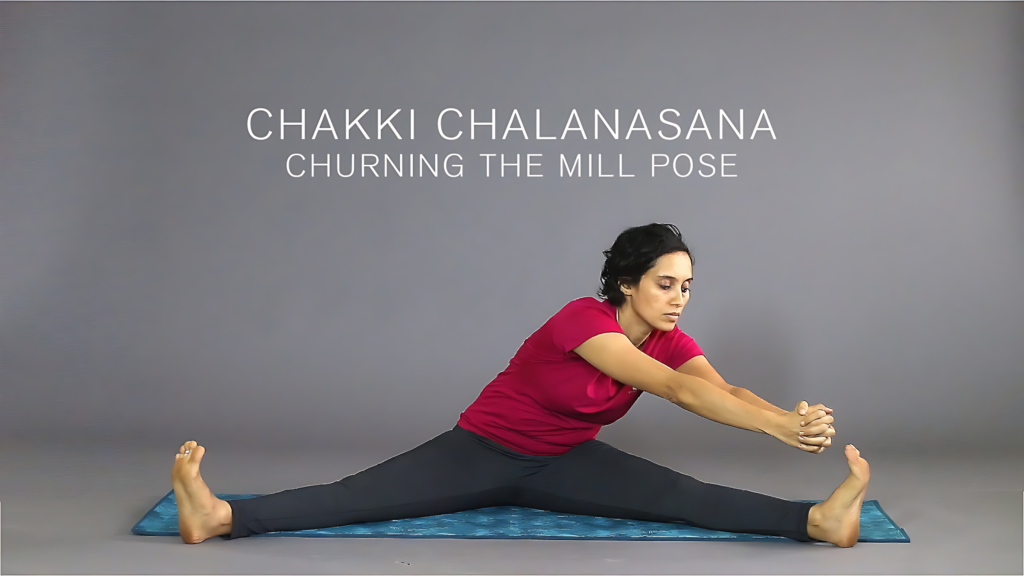
Chatgi Chalasana is another effective pose for managing the problem of Yoga Poses for PCOD in women. Practising this pose daily in a routine helps in modifying the endocrine gland system. The hormonal secretion is also balanced and becomes optimal. It helps in losing weight, which also helps in alleviating the symptoms of Yoga Poses for PCOD.
Steps of Chakki-Chalasana
1. In order to perform this pose, firstly roll out your mat and sit on it.
2. Now you have to stretch both legs forward to form a position of Dandasana. -Now try interlocking your fingers of both hands to make a grip. After that, hold the grip as you hold the grinding wheel.
3. Now you have to inhale deeply and keep your spine very straight.
4. As you exhale, bend your torso a bit forward. And now you have to move both your hands to the right in a circular motion as if you are grinding something.
5. Now you have to bring the body forward, then to the left, and then again right to the centre.
6. You have to make a full circle. Now perform this pose for 5-10 times in one direction, then you can repeat it for the other direction.
7. You have to keep the movement very smooth and comfortable.
8. Try to synchronise it as you inhale and exhale the breath.
6. Kapalbhati

Now, Pranayama complements Yoga. Therefore, Kapalbhati is a method of Pranayama in the yogic discipline that is used to treat and handle problems like Yoga Poses for PCOD. Performing Kapalbhati daily helps in massaging the abdominal organs and strengthening the function of the gut. When our gut is healthy, our body and mind are also healthy. This practice also helps in ensuring a good flow of blood within the body.
Read More: Explore every detail about the ancient holistic Nauli Kriya
How to perform Kapalbhati?
1. Now, to perform Kapalbhati, find a peaceful place very close to nature.
2. Roll out your mat and sit comfortably either in Vajrasana or in Padmasana. Now, you have to keep your spinal cord very straight and upright.
3. Eyes should be closed. Now, start breathing. You have to forcefully contract your abdominal muscles, and throughout your breathing, you have to focus on your exhalation.
4. This helps in removing the toxins from your abdomen through your breath. When the accumulated toxins are gone, you start feeling relief from the Yoga Poses for PCOD symptoms.
5. You can start with performing 60 to around 120 strokes every minute, and you can perform 2 sets in the beginning.
7. Bhujangasana
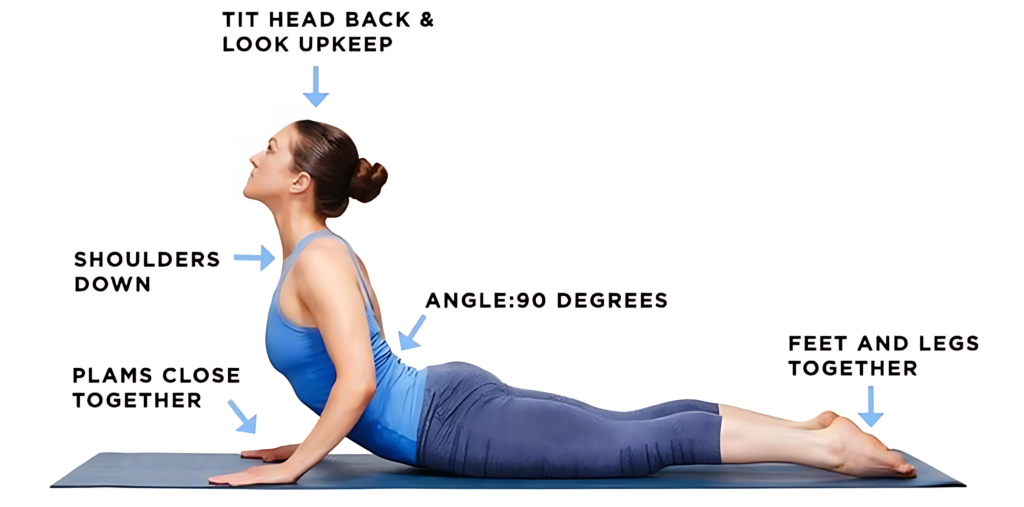
In order to manage PCOD with the help of yoga, you can also perform Bhujangasana. This is one of the most primitive yoga poses that has been used for decades for treating the hormonal imbalances in the human body. This pose helps in strengthening the spinal cord, and it also helps in opening up the chest region. This improves the blood circulation throughout the body and helps in reducing stress in the mind. All this contributes to removing the root cause of Yoga Poses for PCOD. Bhujangasana is known to massage the organs of the abdominal area and stimulate them, ensuring a great hormonal balance within the body.
How to perform Bhujangasana?
1. To perform this beautiful yoga pose, you have to roll out your mat and lie straight on your stomach.
2. Now, bring both palms right below your shoulder. Make sure that your palms are slightly on either side of your shoulder.
3. Keep your fingers closed, and your fingers should face forward.
4. Now, you have to keep your elbows closer to your body, and your elbows should be pointing backwards.
5. Now, press your hands. Your shoulders should be rolled down.
6. Your chest should be lifted so that there is enough strength in your back. Now, keep your elbows bent.
7. Hold this pose for a few breaths and breathe naturally to feel the rejuvenating effect of this wonderful pose.
8. Savasana
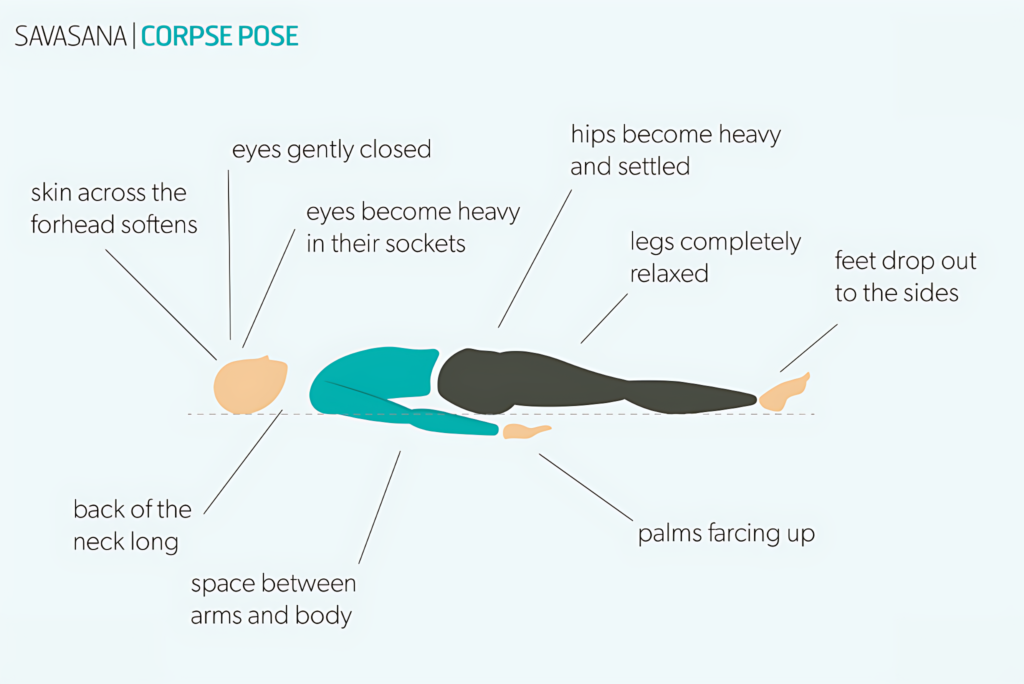
Shavasana is an excellent pose for managing stress, managing the mental as well as the physical stress. It also helps in balancing our emotions. When our body is relieved from stress, the Yoga Poses for PCOD starts dissolving naturally. This asana helps in relaxing the mind and body and removes the tension within us. This aid directly supports the cure of Yoga Poses for PCOD in women!
How to perform Shavasana?
1. In order to perform this asana, roll out your mat and lie straight on it.
2. Your hands should be a bit away from your body, and your legs should also be a bit wide apart a bit.
3. Then rest in this position, inhale and exhale consciously.
4. Feel that every exhale is relieving the stress and throwing it outward. And as you inhale, feel that the positivity is coming inside.
5. You can also manifest to cure yourself while being in this pose.
Read More: What is The Shukra Gemstone? 5 Powerful Types Explained
9. Marjariasana and Bitilasana
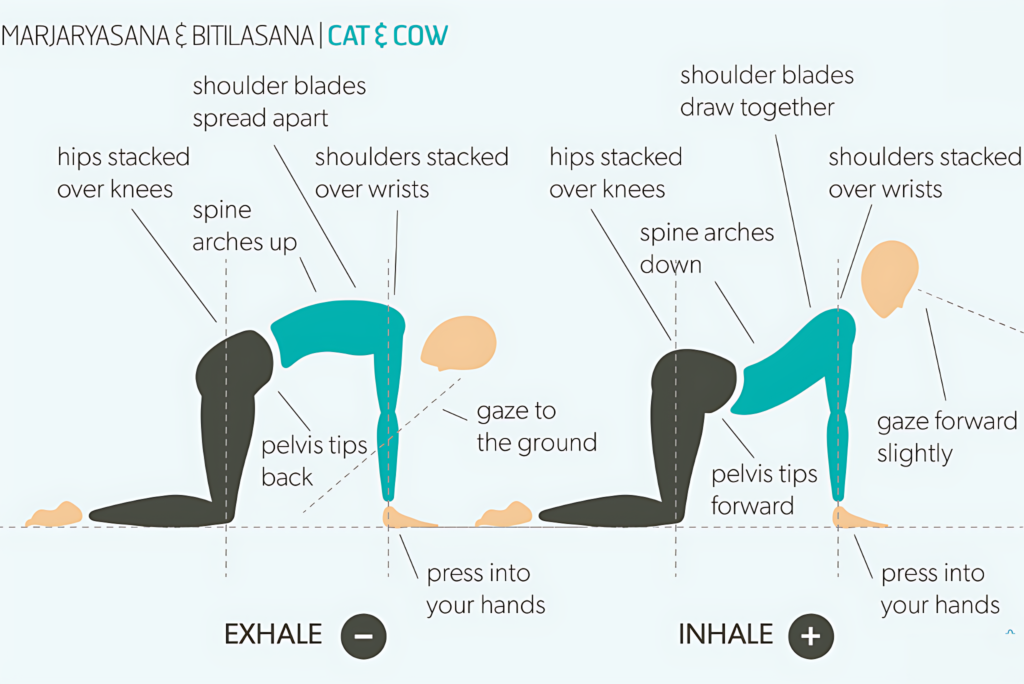
This post helps in relieving the stress and menstrual cramps in women suffering from Yoga Poses for PCOD. It also helps in strengthening the organs of the abdomen and stimulates their functioning, ensuring a good hormonal secretion.
Steps to perform Marjariasana and Bitilasana
1. To land into the pose of Marjariasana and Bitilasana, first you have to perform a tabletop position on the mat where your wrist should be under your shoulder, and your knee should align under your butt.
2. Now you have to keep your spine very straight, head and spine should be in one line, and you are gazing downwards.
3. Now, Majrasana is performed by exhaling slowly, and you have to press your arms on the mat. You have to make your spineabout as round as a cat’s. Now you have to drop your head a bit down, bring your chin right near your chest and draw your navel in. -To perform Bitilasana, you have to inhale very deeply. Now start by arching your spine a bit on the lower side.
4. Now you have to lift your chest and your head in order that it opens the heart, and now you have to look upward.
5. Continue by moving smoothly in between these two poses.
6. You can repeat 8 to 10 rounds as a beginner, breathing naturally.
7. Now release the pose and stay relaxed.
10. Janu-Sirsasana
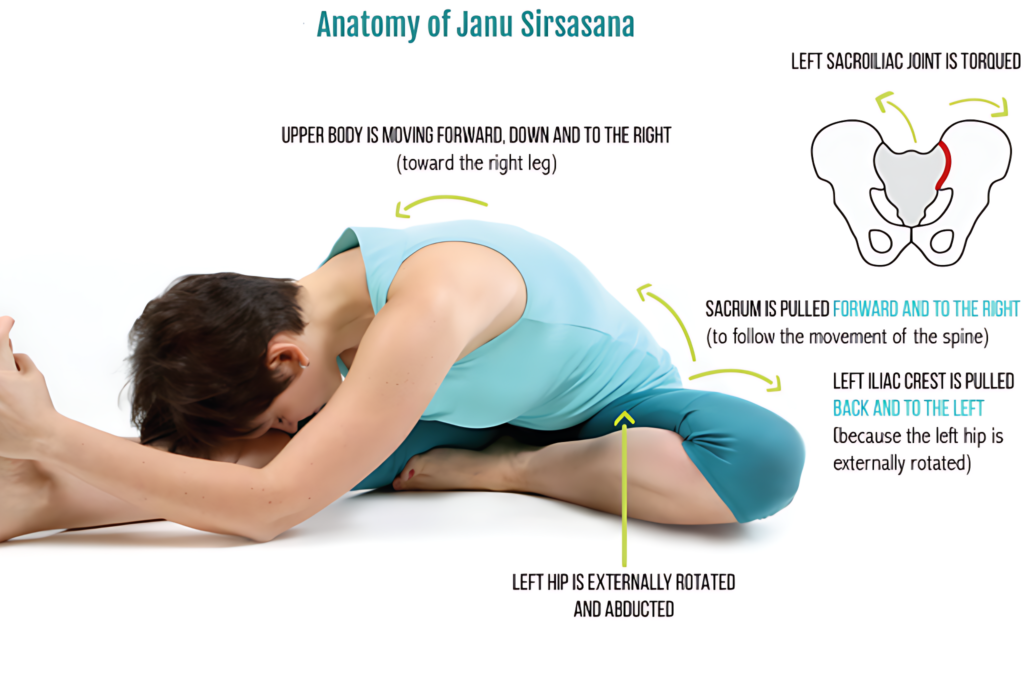
Janu Sirisasana helps in calming the mind and relieving your brain and relieving the anxiety and stress in the brain. It also helps in removing the mild depression that can cause PCOD or worsen its symptoms.
Steps to perform Janu-Sirsasana
1. Start by sitting on the mat in Dandasana pose. Now you have to bend one of your knees, mostly the right knee, and place it on the right foot on its sole.
2. Your right foot must be against the inner part of your left thigh. Keep the other leg in a straight and stretched position and keep it active as if the toes are pointing upward.
3. Now, as you inhale, you have to raise your arms upward, and your spine should be lengthened. After that, exhale and bend forward. Now, hold your left foot or ankle with both hands.
4. Now you have to bring your chin toward the knee of your right leg. You have to be in this pose for at least 10 minutes.
5. Inhale and come to the normal position slowly.