
Do you know that our body has natural roots, Tridosha, but as time has passed and we have stepped into a modern world, we have sadly forgotten our roots. But holistic practices like Ayurveda and yoga still speak about it. When we are sick, we often feel that it might be a superficial condition that can be relieved just by subsiding symptoms as soon as possible. But it is not so. It is actually totally the opposite. When the natural balance in our body starts to be disrupted, it gives us signs to work on it through the symptoms.
For example, if you are having a gut imbalance, then we will get signs like bloating, diarrhoea, constipation, etc. Here, we do not have to treat constipation, but we have to treat the cause of the constipation or diarrhoea, that is, the gut health. And if we go deeper into it, we have to find the root cause of that gut imbalance and have to work on it temporarily for permanent relief. Modern medicines often focus on relieving the symptoms and giving instant relief. It feels very satisfactory, but do you know that constant use of chemical-based medicine with no permanent treatment of the root cause of a problem can make that problem worse and recur in future.
So, let’s talk about the concept of Tridosha. Ayurveda is one of the ancient Indian sciences that has been used for decades as a medicine system. It has the power of treating a human body using various herbs, Ayurvedic medicines, Ayurvedic therapies, and the ancient preparation of Ayurvedic oils and more. It does not entertain any interference, any modern interference to the human body. It believes in treating the human body by using natural sources of medicine. Now, one of its concepts is Tridosha.
In this blog, we will study a lot about the Tridosha that are within our body, and we’ll see how these Tridosha help in regulating it.
What is Tridosha Theory?
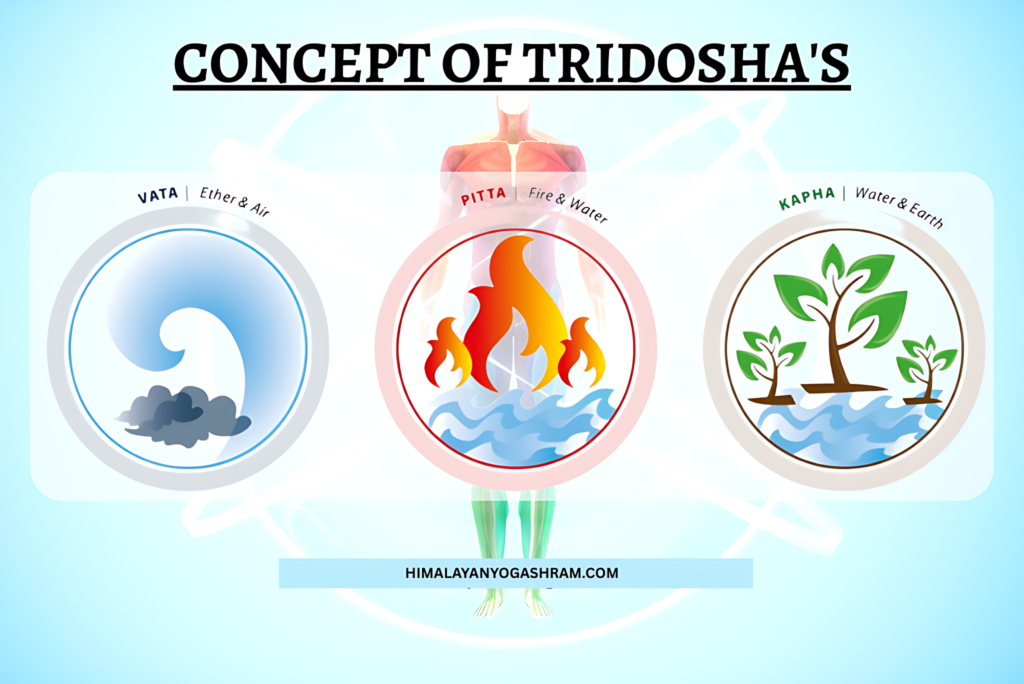
Ayurveda says that our body is made up of various natural elements like dhatus or tissues, malas or waste products, and energy forces like doshas. Our body has Tridosha, Vata, Pitta, and Kapha. These Tridosha regulate our physiological and psychological traits. The doshas help in assisting the tissue creation in the human body. It also helps in eliminating any kind of waste from the body. Three doshas are the ones that regulate the whole body movement, the sensory function, as well as the other activities of our body and mind. The doshas are known as the energies that are related to how we act, how we think, and what our emotions are.
It is also regulated by what kind of food we eat, the season, the current season on the current seasons where we are living, and other inputs that are sensory in nature. When we are living holistically, these Tridosha are balanced, but when we choose a sedentary lifestyle, then our Tridosha get imbalanced. To balance this Tridosha, it is necessary to live as per our intrinsic nature. and should not support any kind of unhealthy food habit, unhealthy lifestyle, or unhealthy pattern of living.
Now, let’s understand the three different types of Tridosha.
1- Vata Dosha
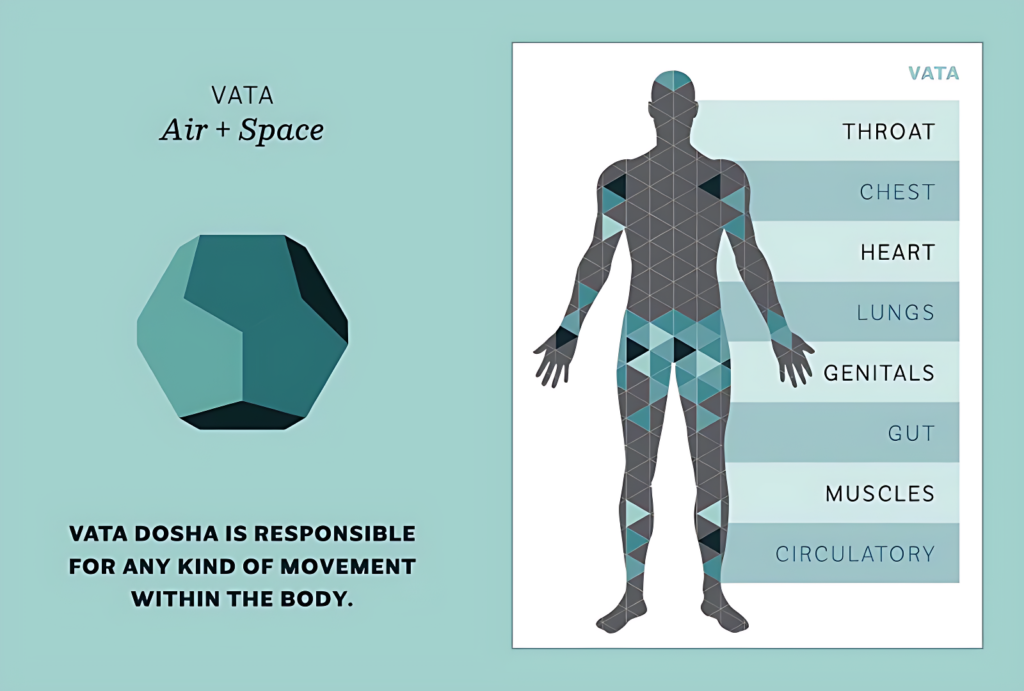
Vata Dosha refers to the wind element in our body. This Dosha flows like the wind. This is derived from the elements like air and space. It is the element in our body that governs the movement within us. Vata is known as the Dosha’s king because it governs the major part ofthea human body and supports the functioning of Pitta and Kapha, which are the other two Doshas within us. When the Vata Dosha is balanced, an individual will experience activeness, creativity, and other natural abilities to live healthily.
But when it gets imbalanced, it can affect our body negatively and can create disorders related to dryness, gut health, skin issues, joint health, etc. Traits of Vata. Vata is dry, it is rough, cold, it moves, and has the ability to get into the finest particles.
Read More: 10 Effective Yoga Poses for PCOD
Five types of Vata
There are five types of vata:
1. Prana: It is related to respiration.
2. Udana, which is related to the upper gut health, is also responsible for our speech.
3. Samana is related to the intestines, and it helps in food digestion.
4. Vyana, which regulates the whole body, especially the cardiac function.
5. Apana is related to the rectum or urinary area. It also controls reproductive health, evacuation, and even childbirth. Location of vata dosha.
These vata doshas are located in the following.
1. Colon
2. Thighs
3. Bones
4. Joints
5. Ear
6. Brain
7. Never
8. Skin
2- Pitta Dosha
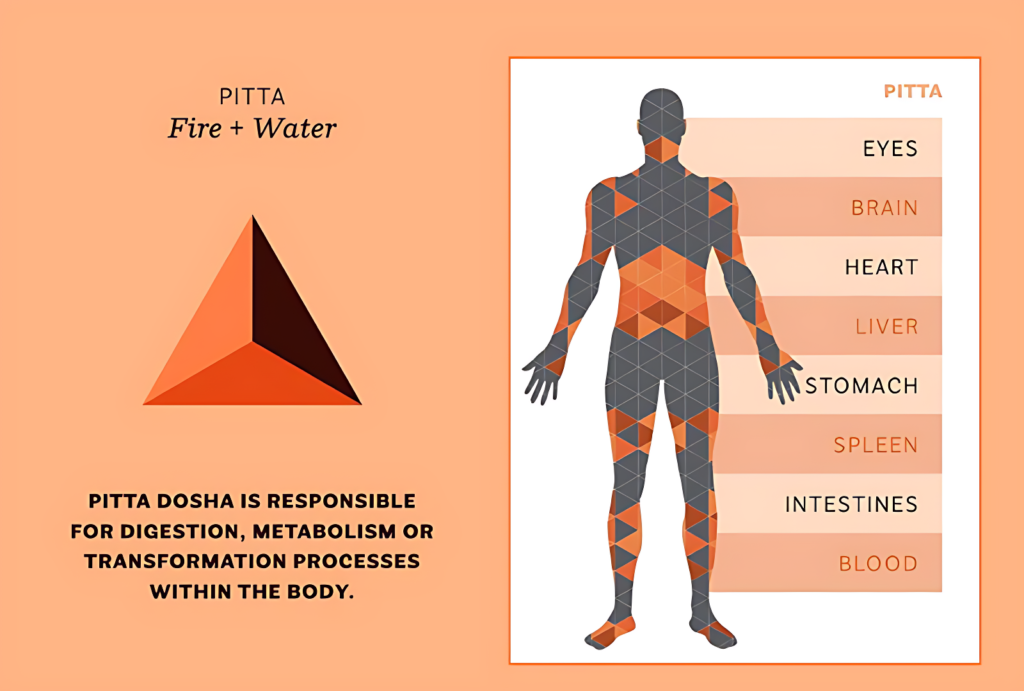
Pitta is the element that represents the water as well as the fire element in the human body. Pitta Dosha is associated with the heat in the body. It supports transformation within the human body. It also regulates the digestive fire, the metabolism in our body. It regulates the excretion of organic acids, enzymes, and bile secretion, etc. Pitta is usually related to fire. When Pitta is balanced, our gut health is good, our hormones and metabolism are good. Hormonal balance and metabolismares good. But if the Pitta Dosha is imbalanced, then it can lead to various acute to severe physical as well as mental health issues.
Five types of Pitta
1. Pachaka. It controls the digestive system by ensuring the right secretion of enzymes.
2. Ranjaka. It controls our skin colour, that is complexion.
3. Sadhaka. It is located in the brain and helps in sensory messaging.
4. Bhrajaka. It is located beneath the skin of our human body,y and it is responsible for our body temperature.
5. Alochaka. As the name suggests, it is in the eyes of a human and regulates the visual system.
Location of Pitta Dosha
1. Stomach
2. Intestine
3. Splean
4. Pancreas
5. Eyes
6. Sweat
7. Blood
3- Kapha Dosha
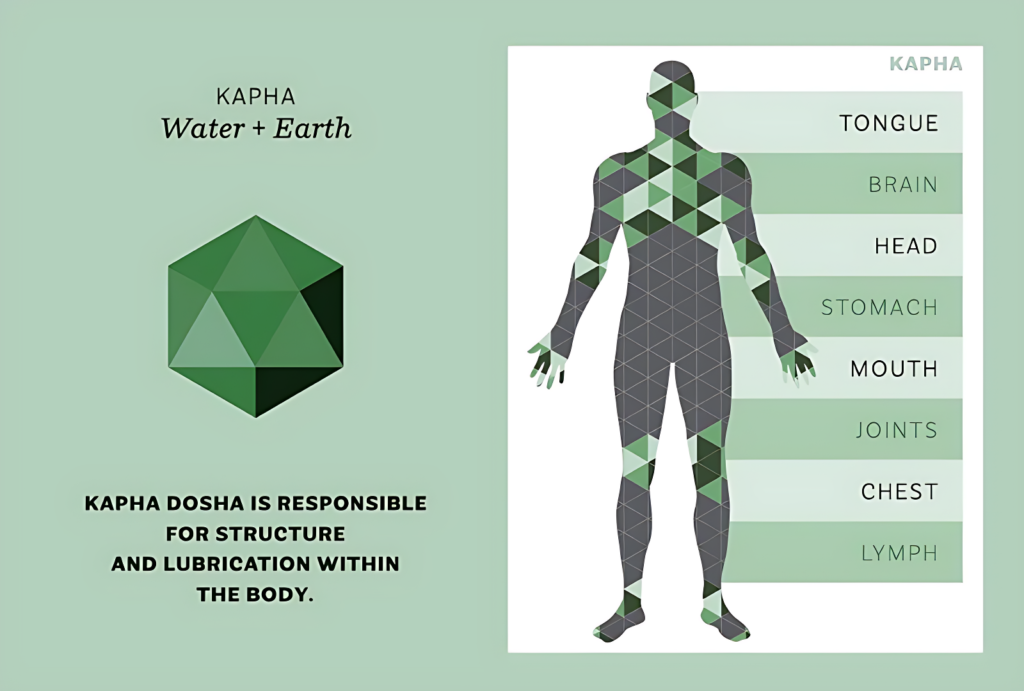
Khapha dosha is the earth and water element in the human body. This is a very heavy dosha. Heaviest of all! It is responsible for keeping the body lubricated. It also regulates the movement of the other two doshas in the human body.
Types of Kapha
1. Tarpaka, it is located in the brain and protects it from any kind of injury.
2. Bodhaka, located at our tongue’s root.
3. Avalambaka, located in the thorax.
4. Shleshaka, it is in the joints and supports friction.
5. Kledaka is in the gut!
Read More: Happy Baby Pose Ananda Balasana Steps and Their Benefits
Location of Kapha
1. Chest
2. Throat
3. Lungs
4. Fatty tissue
5. Connective tissues
6. Tendons
7. Ligaments
8. Lymph
Systematic Ailment Causes
When these three doshas are imbalanced, it can lead to various types of ailments. It leads to various types of ailments. Systematic ailments can stem from the imbalanced three doshas. When there is an imbalance in vata dosha, pitta dosha and kapha dosha, it can lead to various problems.
Let’s understand how the imbalance of dosha can cause systemic diseases:
1. When we do not eat correctly and eat against our dosha constitution, then it can lead to disturbance in our different kinds of Tridoshas.
2. When we do not try to balance our dosha in the initial stage, then it can spread and increase from the primary level to higher levels.
3. When the excess doshas are not treated even at the most basic levels, then they can combine with our body tissues and can lead to different diseases, which can be severe and if n,ot treated, can turn fatal.
Tips for Tridoshic Constitution
To balance the Tridoshic Constitution, follow the following tips:
For Vata Dosha, try meditating, doing yoga, eating warm food, avoiding cold food, avoiding spicy and junk food, drinking water and staying close to nature!
Pitta dosha can be balanced by meditation, eating cold food, and eating food that is sweet and bitter can help in balancing pitta dosha.
Kapha dosha can be balanced by eating food that is lightly cooked and avoiding dairy to keep kapha in the normal range!
Conclusion
Tridosha means the three doshas- Vata, Pitta, and Kapha. These Tridoshas regulate different body functions! When any of these Doshas are imbalanced, then different ailments occur. This imbalance is due to poor food habits, poor lifestyle, and other such factors. By adapting a holistic lifestyle, one can balance the Tridoshas!