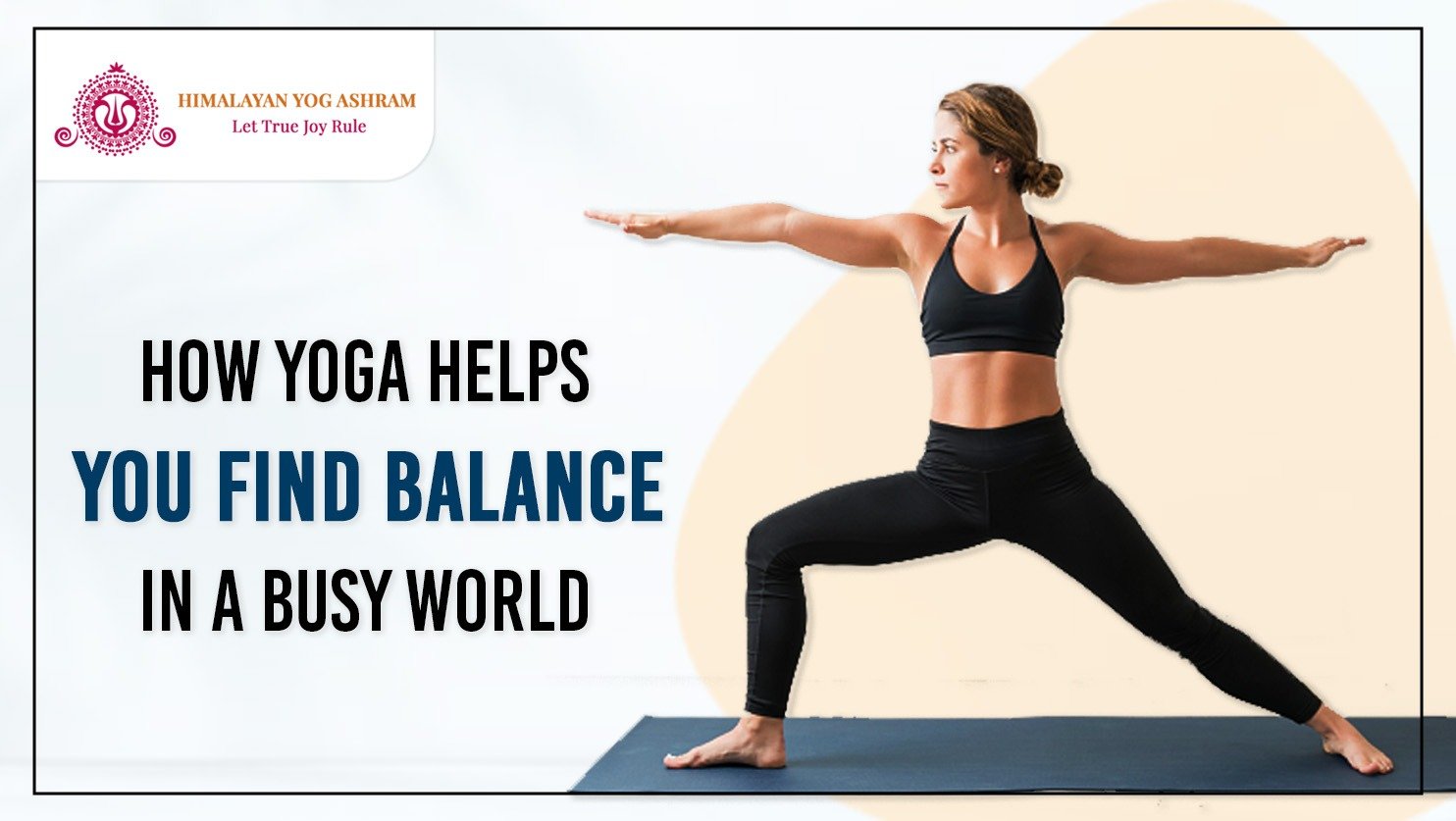
The definition of yoga is yoke or union—union of breath, body, and mind. Simple, right? So why isn’t it? Why do we get so wrapped up in our busy lives, the stress, the tension, and feeling overwhelmed that we forget to breathe, forget to let go and relax?
For me, that’s where practicing yoga comes in. Not only do you get the bonus of stretching and strengthening your muscles, but you also experience the connection of breath to movement. The focus on what’s really happening in your body is what yoga is about for me. The million-dollar yoga question is, “How is it right now?” “How do I feel right now?”
I often start my classes with students lying on their backs. I ask them to notice how their breath feels first: is it shallow, deep, wide? There’s no right or wrong, just observations. Then I might ask them to direct their breath, to make it wide so it presses against the sides of the rib cage, noticing the shape of the breath in the body. Play around with it: make the breath press upwards under the front of the chest. One breath up, feel yourself press the breath out while exhaling, next breath wide. A few repetitions and then I ask them, “How is it now?”
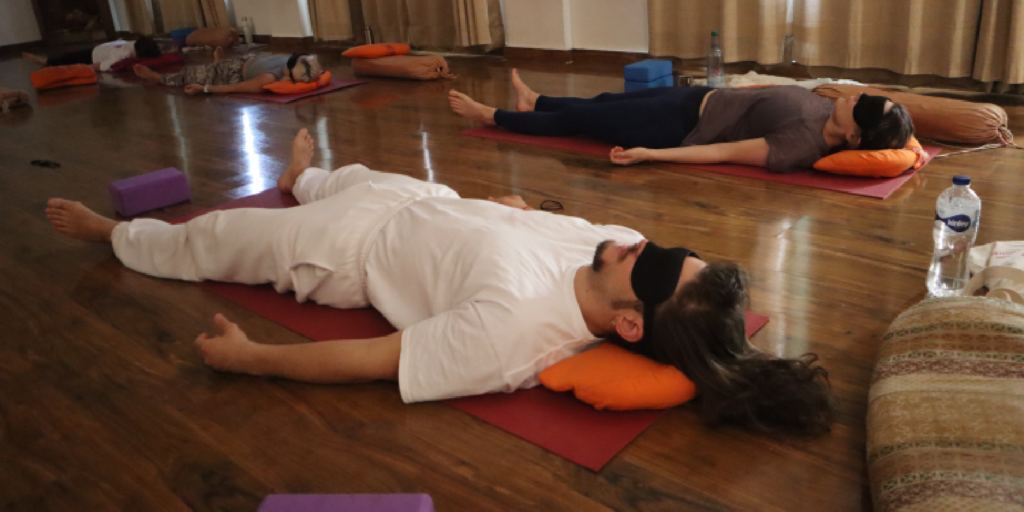
It can be a physical sensation of releasing tension. For example, if you are in a supine twist (Supta Matsyendrasana), notice the tension you are perhaps holding in the legs, pelvis, lower back, middle back, shoulder blades, neck, face, and eyes. Tension is sneaky, so once you’ve scanned the body and let go, scan again and see if any has crept back.
Maybe slowly turning the face from side to side will release the neck as you notice the shape of the breath in the body. Notice it coming from a point in your belly all the way up to your collarbones. Feel the breath press against the rib cage, press against the skin. Doing it with your eyes closed allows for the conversation… “How does it feel right now?”
In yoga, the term bhava means attitude. Postures can definitely bring up certain attitudes and emotions. For instance, Matsyendrasana always brings me a sense of quiet. There’s a humbleness and humility, a lovely sense of dignity that I experience when I’m in that posture, especially if I bow my head. How do you feel now? Can you feel the attitude or an emotion bubbling up?
Observing the conversation within yourself, stopping the chatter in your head, and getting back into your body is what it’s all about. The past has happened, the future is unsure, all that is certain is now.
Yoga Exploring the Connection
The beauty of yoga lies in its simplicity and depth. By consistently asking yourself “How is it right now?” and “How do I feel right now?” you cultivate a habit of mindfulness and presence. This practice can extend beyond the yoga mat and into everyday life, helping you navigate stress and challenges with greater ease.
Techniques to Enhance Awareness
Mindful Breathing: Beyond the structured breathing exercises, simply taking a moment to notice your breath throughout the day can anchor you in the present moment. Whether you’re sitting at your desk, stuck in traffic, or waiting in line, take a few deep breaths and observe how you feel.
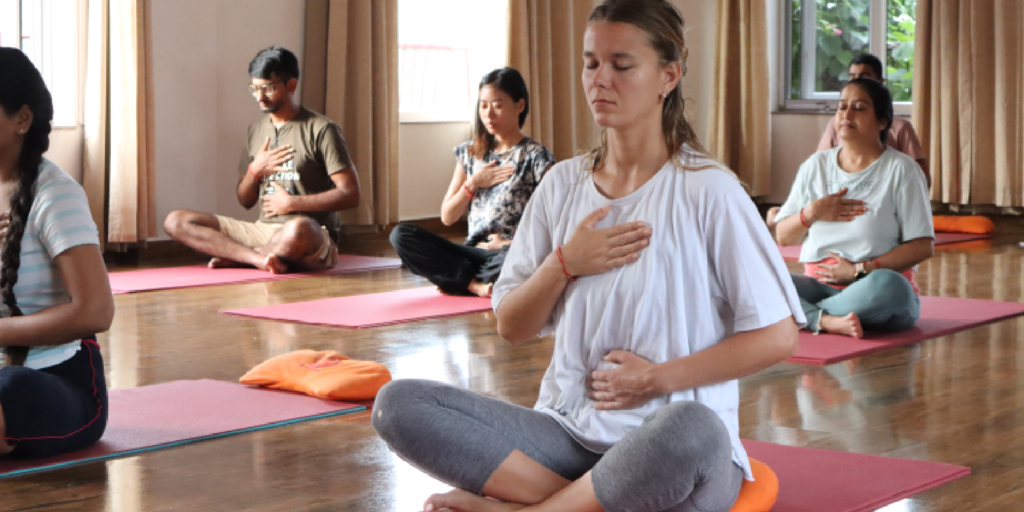
Body Scanning: Incorporate body scans not just in your yoga practice but also as a daily check-in. Set aside a few minutes each day to mentally scan your body from head to toe, releasing any tension you find. This can be especially helpful before bed to promote relaxation and improve sleep quality.
Gratitude Practice: Combine your yoga practice with a gratitude journal. After your practice, take a few moments to write down what you’re grateful for. This can shift your focus from stress and worry to appreciation and positivity, enhancing your overall well-being.
Regular Self-Inquiry: Make it a habit to regularly ask yourself “How is it right now?” throughout your day. This question can help you stay connected to your body and emotions, allowing you to make conscious choices that support your health and happiness.
The Power of Bhava
Understanding bhava, or attitude, can transform your yoga practice. Each posture can evoke different feelings and attitudes, offering insights into your inner world. By paying attention to these responses, you can deepen your self-awareness and cultivate a more compassionate relationship with yourself.
For example, notice how you feel in different poses:
Tadasana (Mountain Pose): Feelings of stability, strength, and confidence.
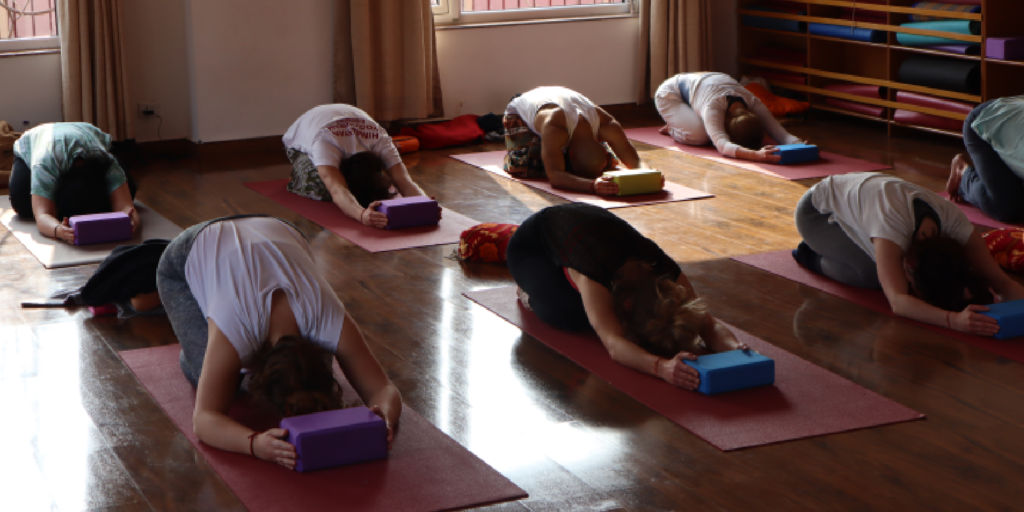
Balasana (Child’s Pose): A sense of surrender, comfort, and grounding.
Virabhadrasana (Warrior Pose): Empowerment, focus, and determination.
Reflecting on these feelings can reveal underlying emotions and attitudes, providing an opportunity for growth and transformation.
Conclusion
Yoga is more than a physical exercise; it’s a journey of self-discovery and connection. By continuously asking yourself, “How is it right now?” and embracing the union of breath, body, and mind, you can navigate life with greater ease, presence, and joy. Yoga Teacher Training in Rishikesh offers an immersive experience to deepen this practice, connecting you with ancient traditions and modern insights.
So, pause for a moment, take a deep breath, and ask yourself, “How is it right now?” This simple question can guide you back to your center, helping you find peace and clarity in the midst of life’s busyness. Yoga Retreat in Rishikesh provides the perfect environment for such reflection, offering serene settings and expert guidance to enhance your journey of inner peace and self-awareness.